

Story by Hailey Wist | Photographs by Erin Adams
Before refrigeration, before the grocery store, before green beans arrived by cargo plane from Argentina, people in the Carolina mountains and foothills put food up. What you canned in July, you ate in January. Drying, smoking, salting, and canning allowed food to last beyond the season. Preservation wasn’t optional; it was survival arithmetic, worked out jar by jar in hot kitchens across the region. The cuisine of Appalachia focused on seasonal local ingredients and practices like pickling, foraging, canning, and food preservation as a response to geography. The mountains limited access to goods from the outside world. What grew well here—green beans, tomatoes, corn, cucumbers, stone fruits— shaped what ended up in the pantry. Families thought in terms of seasons rather than days, and decisions made during harvest affected meals long after. The foodways and culinary culture that grew from that necessity are still very much alive in the region.
Executive Chef Shawn Creef
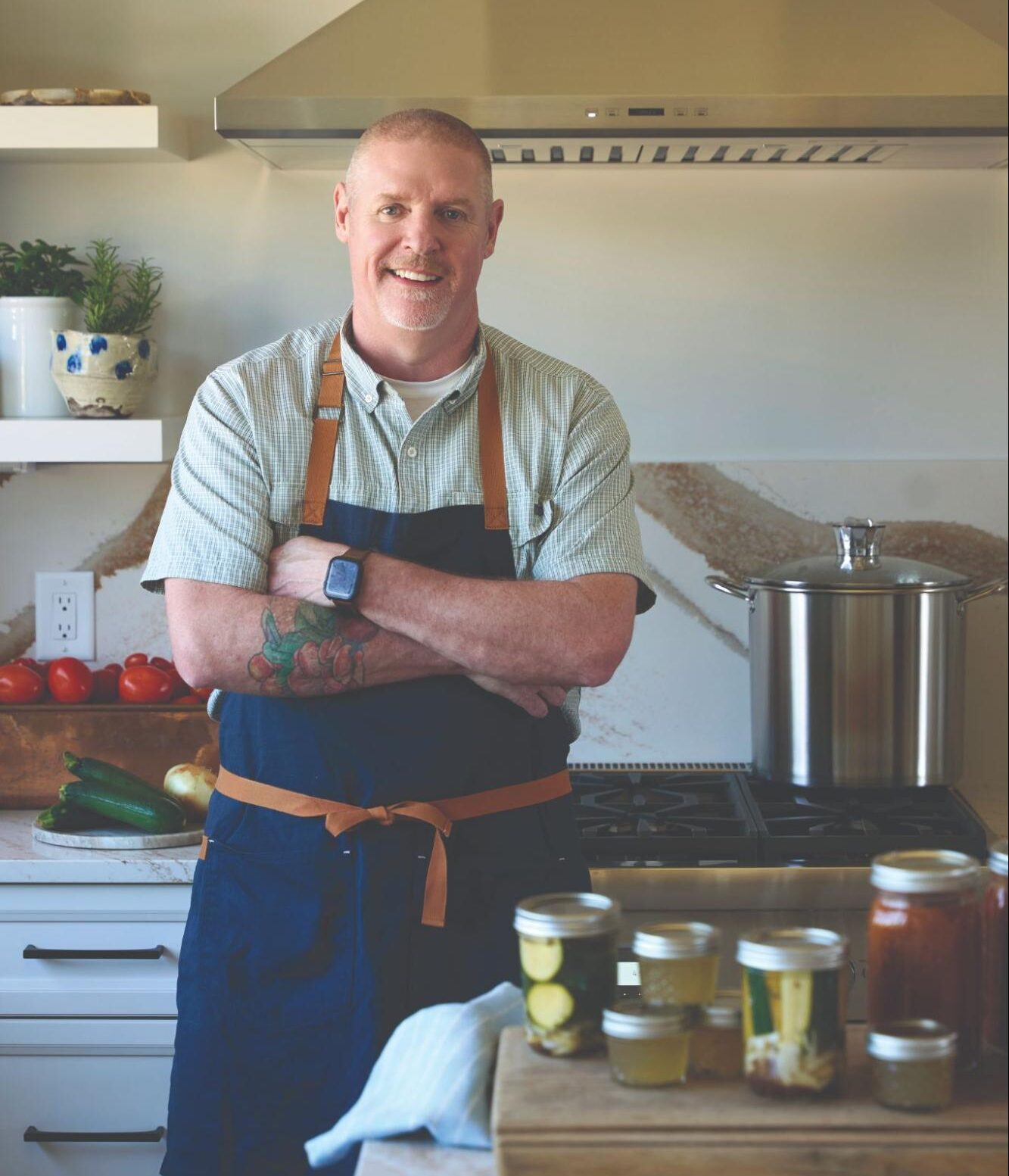
Executive Chef Shawn Creef grew up in Spartanburg, South Carolina, but his people are from the Shenandoah Valley. His grandmother, Mildred Creef or Maw Maw, kept a basement lined with wooden shelves nailed to a cinder block foundation, stocked floor to ceiling with things she had put up herself. “All of us grandchildren were horrified when we had to go down there,” he says. “The squeaky stairs, the little light with just the pull cord. But looking back on it, it was amazing.” Green beans, pickles, jellies and jams, tomato sauce—the shelves held an entire season’s worth of work.
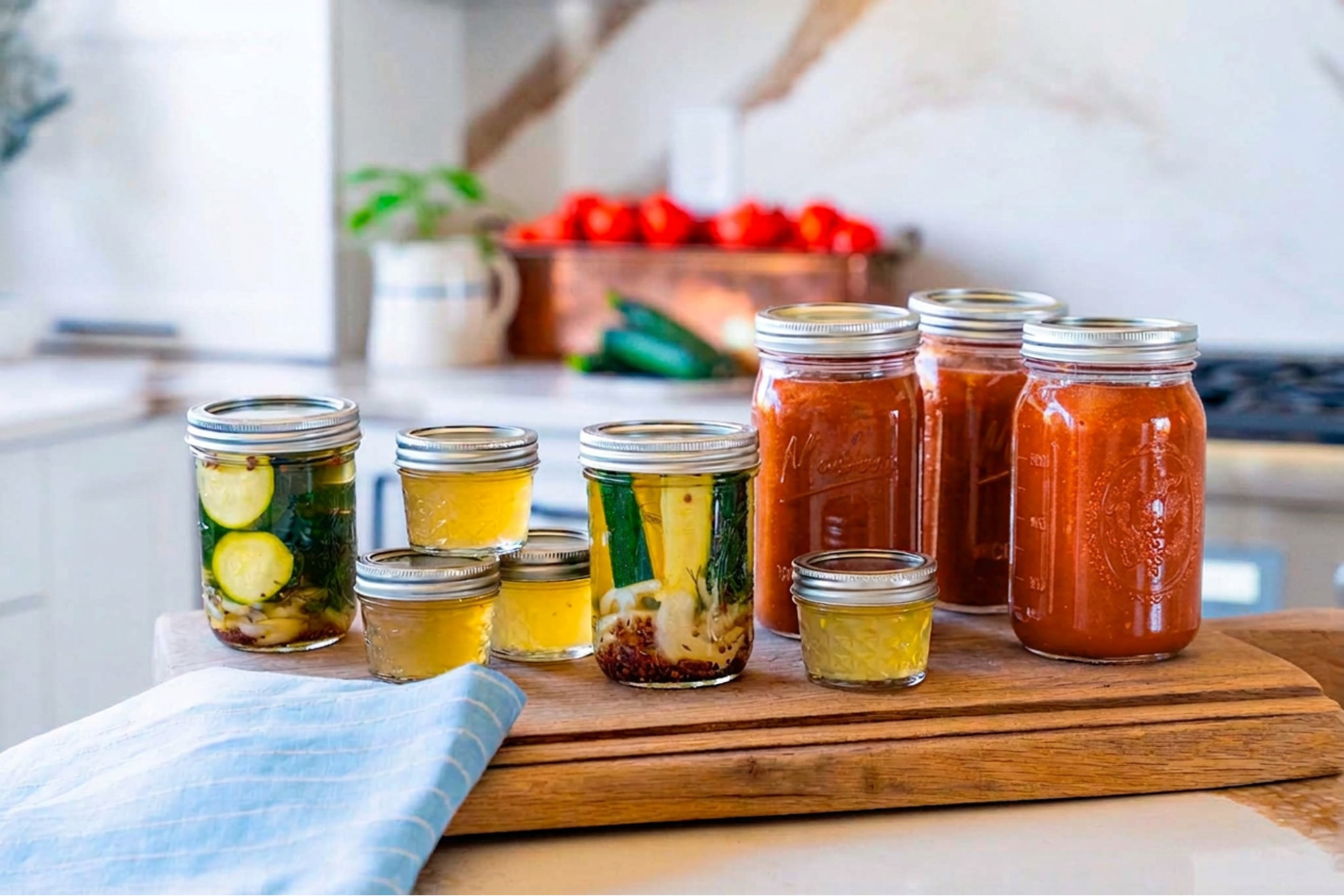
Creef is now the executive chef at The Cliffs at Keowee Falls, and the instinct Maw Maw instilled has never left him. On a recent afternoon, he walked us through three recipes to add to a home cook’s repertoire, including a zucchini quick pickle, a roasted tomato sauce, and something more unexpected: corn cob jelly.
What Creef is doing in this kitchen is not nostalgia for its own sake. It is an acknowledgment that the people who came before us in these mountains were solving real problems with elegant means, and that those solutions still work. That logic built the foodways of the Carolinas and it is encoded in every jar Maw Maw lined up on those basement shelves in Waynesboro.
Executive Quick Zucchini Pickles
Yields 3 Pints
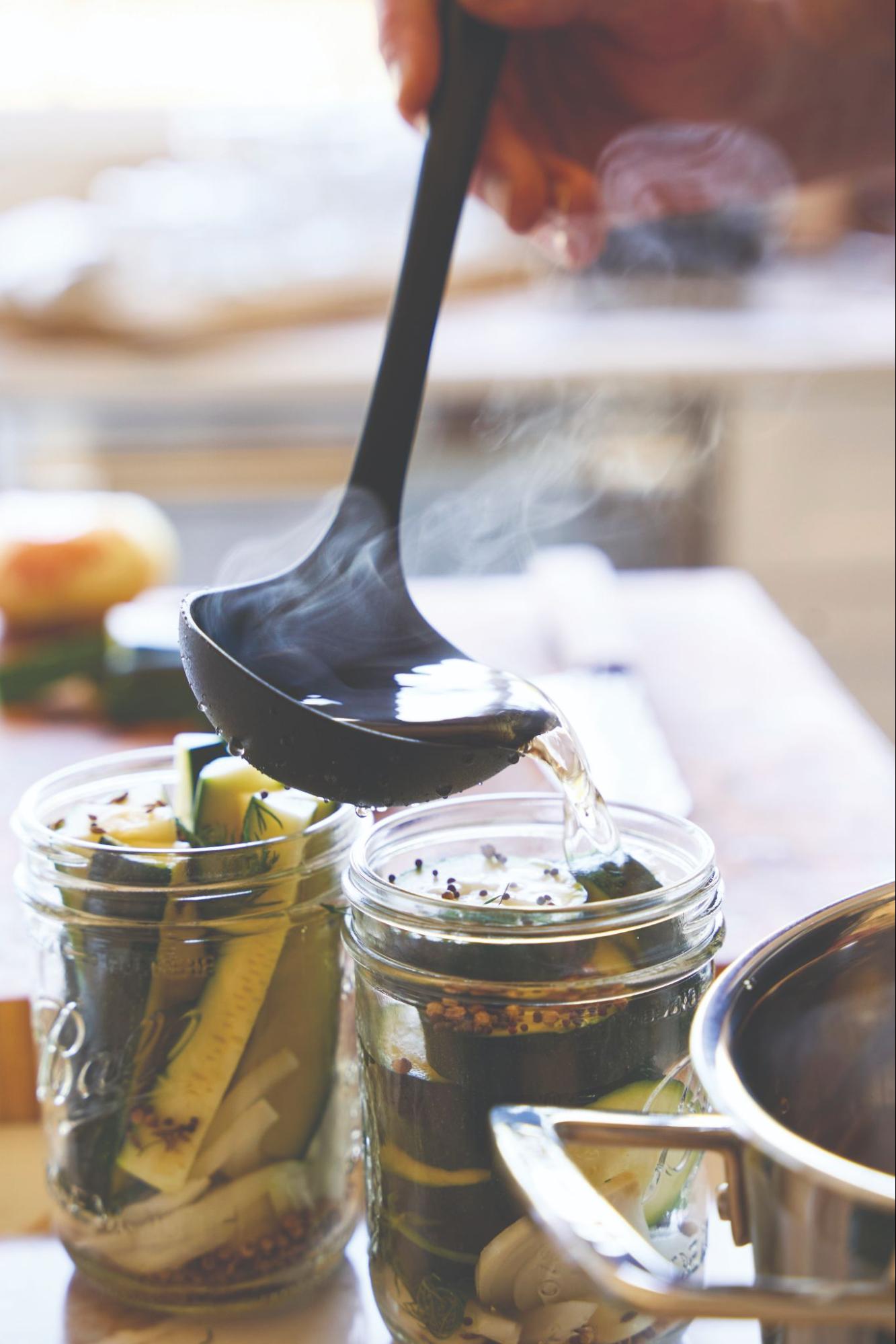
Zucchini has been a summer staple in Appalachian gardens for generations—prolific and easy to grow. The challenge was never growing enough; it was keeping up with it. Pickling was a practical solution. Brine first, then pack sanitized jars with zucchini, dill, garlic, and peppercorns.
BRINE
2 cups water
1 ½ cups cider vinegar
¼ cup raw sugar
2 tbsp kosher salt
INGREDIENTS
3–4 medium zucchinis
6 dill sprigs
6 garlic cloves
1 small yellow onion, julienned
tsp black peppercorns
tsp mustard seed
1 tsp dill seed
1 tsp coriander seed
DIRECTIONS
Combine brine ingredients in a saucepan and bring to a boil. Sanitize your jars. Pack each jar with zucchini, dill, garlic, onion, and spices, then pour the hot brine directly over the top and seal. No water bath required. These are a quick pickle, meant to be eaten within a month and stored in the refrigerator.
Roasted Red Tomato Sauce
Yields 4 Quarts
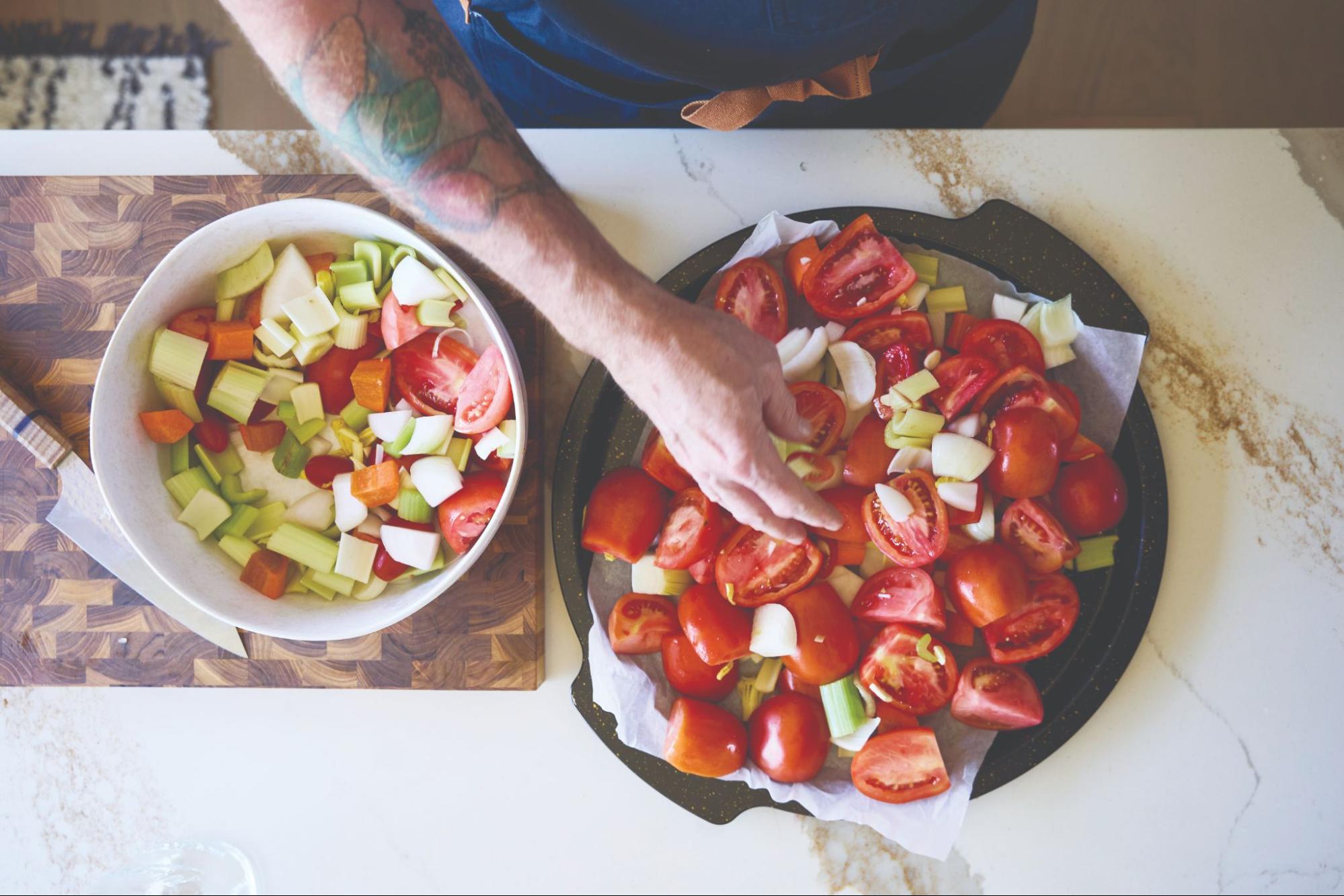
Tomatoes were one of the most commonly preserved foods across the Carolina mountains and foothills—a reliable summer crop that could be roasted, stewed, and sealed away to carry the flavor of August into the depths of winter. The critical detail is citric acid, added to bring the pH down enough to make the sauce shelf-stable. “It further acidifies the tomatoes, which is very important for the canning process,” Creef says.
INGREDIENTS
15 lbs roma tomatoes
1 large yellow onion (about 2 cups, diced)
1 cup diced carrot
1 cup diced celery
10 garlic cloves
2 bay leaves
1 cup red wine
½ cup balsamic vinegar
2 tbsp black pepper
1 tbsp kosher salt
2 tsp citric acid
DIRECTIONS
Combine tomatoes, onion, carrot, celery, and garlic on a roasting pan and roast at 450 degrees Fahrenheit for 45 minutes until softened. Transfer to a large pot, add the remaining ingredients, and simmer until everything comes together. Remove bay leaves, then puree until smooth. Sanitize jars, fill with sauce, and process in a boiling water bath at 212 degrees Fahrenheit for 40 minutes. Remove and allow to cool. The lids will snap down as the jars seal. Properly processed, the sauce will keep for 12 to 24 months.
Corn Cob Jelly
Yields 4 Quarts
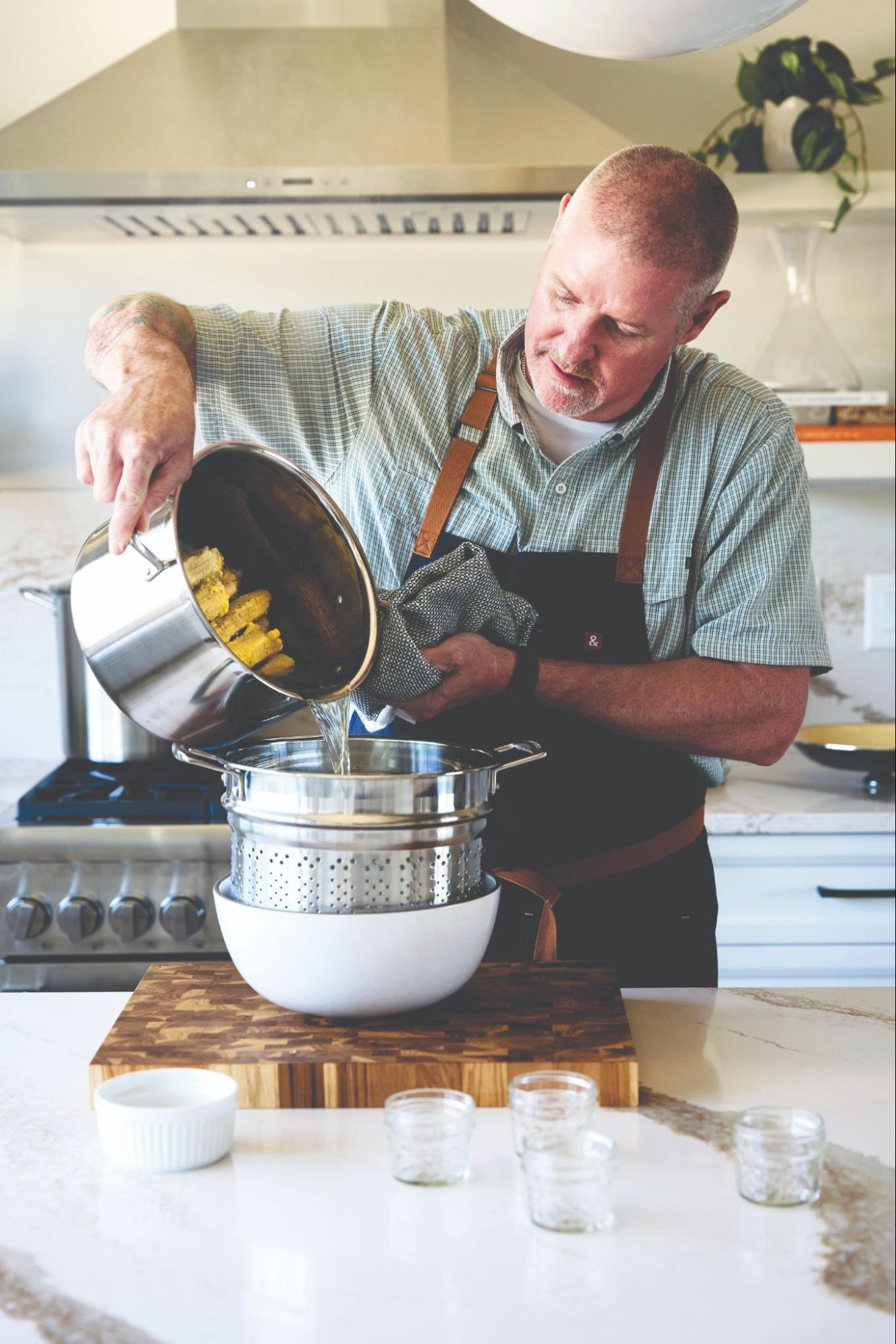
Corn has been central to Appalachian foodways since long before European settlement. The Cherokee grew it, settlers adopted it, and it became a cornerstone crop across the region. Here again, nothing goes to waste. After a summer cookout, the stripped cobs that would otherwise go into the compost can be steeped in water, their residual sweetness extracted into a light, golden liquid. Add sugar and pectin, process in a water bath, and what you have is a pale jelly with a flavor that lands somewhere between honey and sweet corn. “You can throw in basil, you can throw in other herbs,” Creef says. “You can really change the flavor profile.” He recommends it on toast, or anywhere you might reach for honey.
INGREDIENTS
12–16 medium corn cobs
2 quarts water
3 cups corn cob juice (extracted from simmering)
1.75 ounces Sure-Jell pectin
3 cups raw sugar
DIRECTIONS
Simmer corn cobs in 2 quarts of water for 30 minutes to extract their flavor. Strain and measure out 3 cups of the liquid. Combine the corn cob juice, pectin, and sugar in a pot and bring to a boil. Sanitize jars, fill with jelly, and process in a boiling water bath at 212 degrees Fahrenheit for 20 minutes. Remove and allow to cool.
This story was featured in Cliffs Living magazine. To see more stories like this one and learn more about The Cliffs, subscribe here.