


Story by Sandy Lang
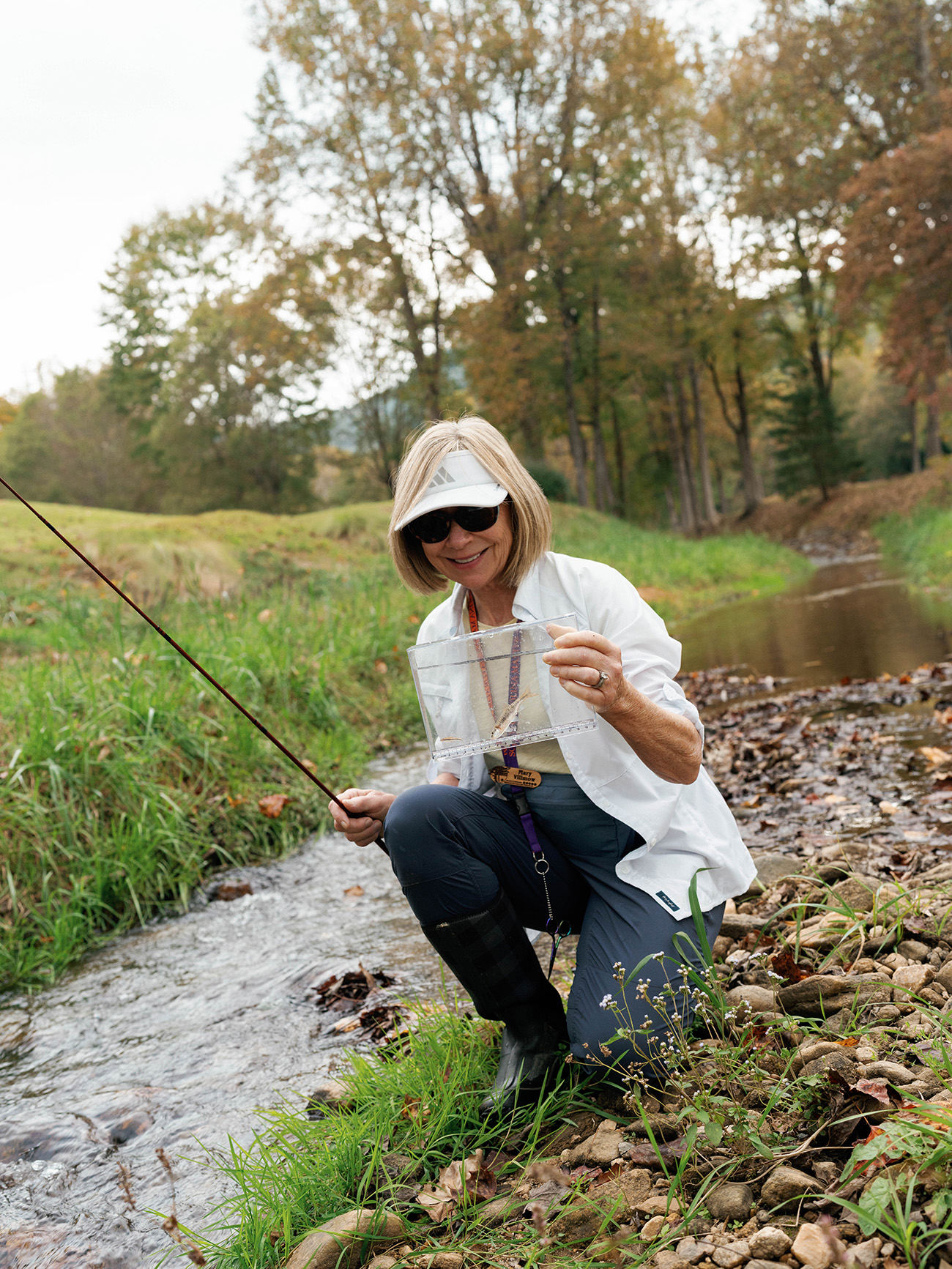
Size matters in fishing—typically, the bigger, the better. But for Mary Villmow, her pursuit is the tiniest of fish. On hikes lately, she’ll bring her micro fishing gear. The telescoping pole isn’t much bigger than a chopstick, the line nearly as thin as human hair, and then a super-tiny hook baited with a morsel of worm.
What she seeks are the typically overlooked minnows and nongame fish hovering on the bottom of chilly forest streams, each smaller than your index finger. She says her two most prized catches are the creek chub (the tiniest she’s caught on a hook) and the colorful tangerine darter (brilliant turquoise-green and orange). Both are among the 140 or so native freshwater fish species of the Carolinas.
“I’d snorkeled in the Caribbean and Hawaii, but I had no idea of the mysteries underwater here—fish, mussels, salamanders, leopard frogs, aquatic turtles—just a whole host of beauty.”
Once she coaxes a wild fish onto the hook, The Cliffs at Mountain Park homeowner typically will gently transfer it briefly to a water-filled viewing box—getting a clear view of the fish and its fins when raised, how they naturally look in the water. She takes photographs to help her identify the fish, and then uses jeweler’s tools to remove the hook—everything is mini-sized and carefully done. It is a bit like field biology. Villmow notes that her catch-and-release hobby is much more akin to birdwatching than to traditional fishing. (In Japan, micro fishing has been popular for centuries.) She’s keeping a life list of the species she’s caught and observed—to date, totaling about two dozen species caught on a hook and another dozen observed while snorkeling or netting fish in nearby streams as a volunteer at various conservation events.
Her passion for the tiny fish is new. Originally from Chicago, Villmow and her husband, Keith, first visited The Cliffs in 2019. Both entering retirement years, her husband was interested in the golfing opportunities, and she was excited about hiking and biking. Villmow, who has a liberal arts degree and worked in marketing, says she’d always been “a real city girl.” While she didn’t grow up fishing, the move to South Carolina kindled an interest in science and biology.
“I was amazed by the beauty of the Southeast,” Villmow says, and she eagerly began to learn more about the plants, animals, and ecological diversity in the region. Eventually, she enrolled in the twelve-week Master Naturalist course through Clemson University. And it was during the comprehensive sessions—covering everything from geology to tiny invertebrates, plant biology to water quality—that she learned about the myriad of native species in the rocky beds of local streams and rivers.
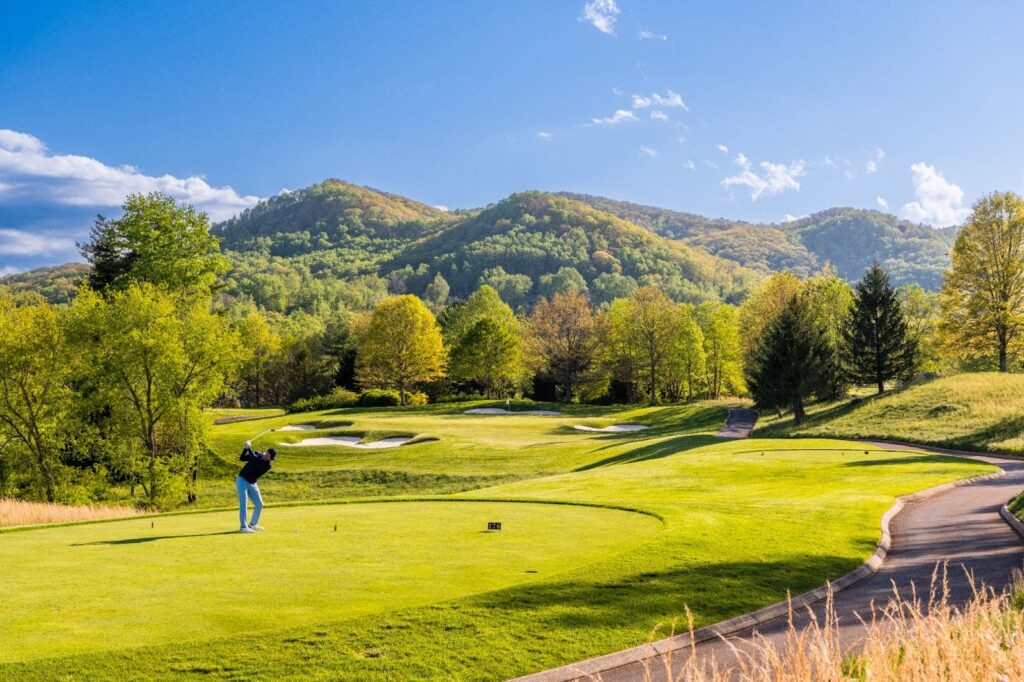
Among the many bodies of water she’s fished and explored are the clear waters of Terry Creek and the Saluda River on the Valley and Mountain Park golf courses, as well as the Chattooga River watershed, Long Shoals Wayside Park, and other fishing holes along the Cherokee Foothills Scenic Highway. Her gear is so minimal that she says she often has it with her, just in case she happens upon a stream. “It’s a fun little hobby—there’s a thrill you get,” she says. “If anybody’s interested in micro fishing, I’m happy to introduce them to it.”
This story was featured in Cliffs Living magazine. To see more stories like this one and learn more about The Cliffs, subscribe here.